
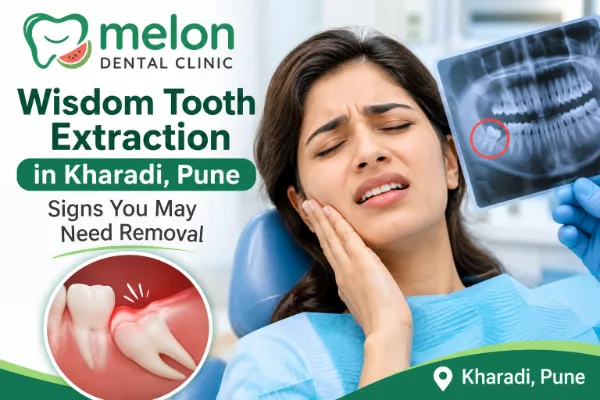
Wisdom teeth are the last set of molars to develop, usually appearing between the ages of 17 and 25. While some people experience no problems, others may develop pain, swelling, infection, or difficulty chewing when these teeth emerge. In certain cases, wisdom tooth removal may be recommended to prevent further dental complications.
If you are experiencing discomfort at the back of your mouth, consulting a qualified dentist in Kharadi, Pune, can help identify the cause and determine whether extraction is necessary. At Melon Dental Clinic, Kharadi, patients can receive a detailed dental evaluation and guidance about suitable treatment options.
1. Persistent Pain at the Back of Your Mouth
One of the most common signs of wisdom tooth problems is continuous or recurring pain near the back of the jaw. This discomfort may become more noticeable while chewing, opening your mouth, or brushing your teeth.
Pain can occur when a wisdom tooth does not have enough space to emerge properly. A dental examination can help determine whether the discomfort is related to an erupting wisdom tooth or another dental condition.
2. Swollen or Bleeding Gums Around the Wisdom Tooth
When a wisdom tooth partially erupts, a small flap of gum tissue may remain over it. Food particles and bacteria can become trapped underneath, leading to inflammation or an infection known as pericoronitis.
Common symptoms include:
- Redness and swelling around the gums
- Bleeding while brushing
- Bad breath or an unpleasant taste
- Tenderness around the affected tooth
If these symptoms occur repeatedly, a dentist may recommend further evaluation and discuss appropriate treatment, including extraction when necessary.
3. Impacted Wisdom Teeth
An impacted wisdom tooth is a tooth that cannot emerge properly through the gums because of limited space or an unfavourable position. It may remain trapped beneath the gum or partially emerge at an angle.
Common types of impacted wisdom teeth include:
- Mesioangular: The tooth is tilted towards the neighbouring molar.
- Distoangular: The tooth is angled towards the back of the mouth.
- Horizontal: The tooth grows sideways.
- Vertical: The tooth remains upright but may not erupt fully.
A dentist may recommend an X-ray to assess the tooth’s position and its relationship with surrounding structures.
4. Difficulty Opening Your Mouth or Chewing
Wisdom tooth infections and surrounding inflammation can cause jaw discomfort, stiffness, and difficulty opening the mouth. Some people also experience pain while eating or swallowing.
These symptoms should not be ignored, particularly when accompanied by swelling or fever. Prompt dental assessment is important to identify the underlying problem.
5. Damage to Nearby Teeth
A wisdom tooth growing at an unusual angle may put pressure on the second molar. This can increase the risk of food accumulation, tooth decay, gum problems, and damage to the neighbouring tooth.
Early diagnosis can help prevent avoidable complications and allow the dentist to recommend an appropriate treatment plan.
6. Bad Breath or an Unpleasant Taste in Your Mouth
A partially erupted wisdom tooth can create spaces where food debris and bacteria accumulate. This may lead to persistent bad breath or an unpleasant taste, even after brushing.
If the problem continues, a dental consultation can help identify whether the wisdom tooth is contributing to the issue.
What Happens During Wisdom Tooth Extraction?
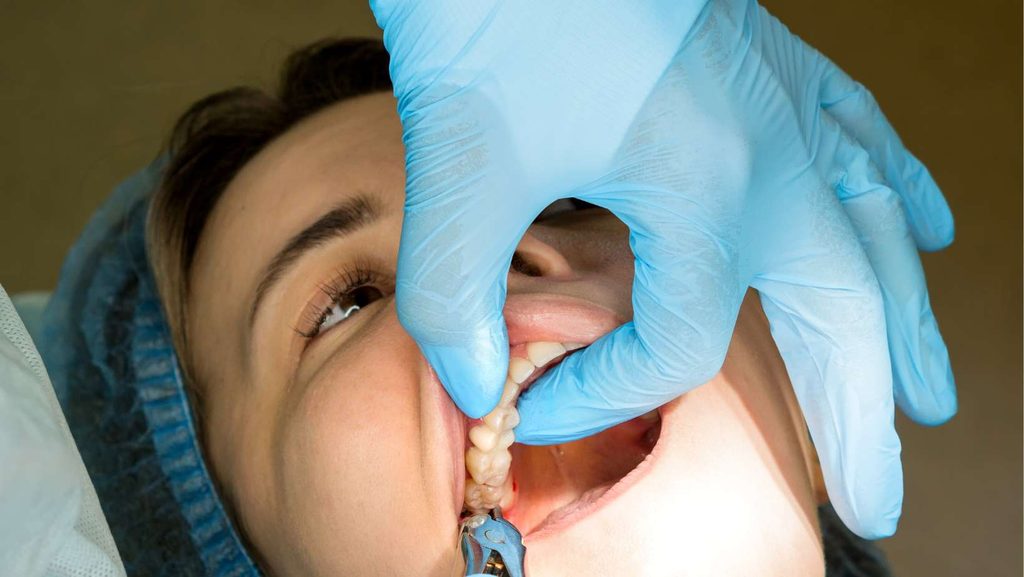
The first step is a detailed Wisdom Tooth Extraction. Your dentist may recommend a dental X-ray to understand the tooth’s position, root structure, and proximity to nearby nerves.
Depending on the condition, wisdom tooth removal may involve:
- Simple Extraction: Used when the wisdom tooth has erupted sufficiently and can be removed without surgical access.
- Surgical Extraction: Recommended for certain impacted teeth that require access through the gum or surrounding bone.
Local anaesthesia is generally used to keep the area numb during the procedure. Your dentist will explain the treatment plan, expected recovery, and possible risks before proceeding. NHS+1
Tips for Recovery After Wisdom Tooth Removal
Following your dentist’s post-extraction instructions can support healing and reduce discomfort.
- Eat soft foods such as curd, mashed vegetables, and khichdi.
- Avoid hard, crunchy, and very hot foods initially.
- Do not disturb the blood clot at the extraction site.
- Maintain oral hygiene carefully around the affected area.
- Avoid smoking during recovery.
- Attend follow-up appointments as advised.
Contact your dentist if you experience increasing swelling, severe pain, fever, or persistent bleeding. NHS+1
Where to Get Wisdom Tooth Extraction in Kharadi, Pune?
If you are experiencing wisdom tooth pain, gum swelling, or discomfort while chewing, timely dental evaluation can help prevent complications.
Melon Dental Clinic in Kharadi, Pune, provides dental consultations and treatment planning based on individual oral health requirements. Under the guidance of Dr. Aashish Dilip Patil, the clinic focuses on understanding each patient’s dental concerns and discussing appropriate treatment options.
Whether you are looking for a dentist in Kharadi, Pune, or a reliable dental clinic in Pune for wisdom tooth evaluation, seeking professional advice is an important first step.
Book a dental consultation at Melon Dental Clinic, Kharadi, Pune.
Clinic: Melon Dental Clinic
Location: Kharadi, Pune
Phone: +91 98765 49110